
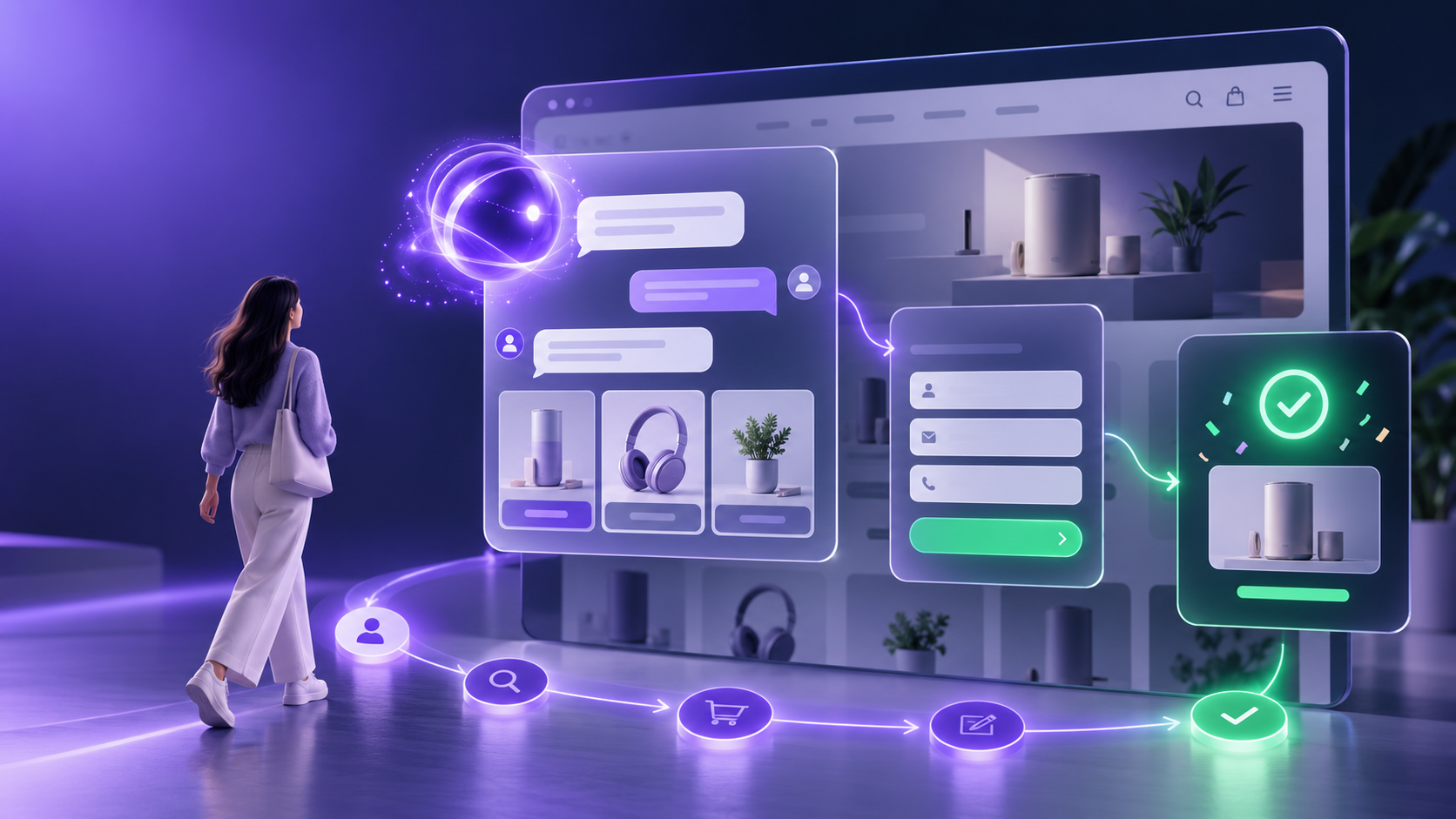
Most business websites are always available, but most sales teams are not. A potential buyer can land on a pricing page late at night, compare services during a weekend, or hesitate over one unanswered question before leaving. An AI sales assistant for your website is designed to close that response gap.
Instead of making visitors search through menus, forms, and PDF brochures, the assistant gives them a conversational way to understand the business. It can answer questions from approved company information, guide people toward the right product or service, and capture contact details when a human follow-up is needed.
The important distinction is that a useful website sales assistant should do more than display scripted replies. It should understand the visitor’s question in context and provide an answer grounded in the business’s own material.
What is an AI sales assistant for a website?
An AI sales assistant is a conversational layer placed on a company website. A visitor asks a question in ordinary language, and the assistant responds using information supplied by the business, such as website pages, FAQs, product documents, service guides, or policies.
For the visitor, it feels like getting immediate help without searching the entire site. For the business, it creates an always-available first point of contact that can handle repetitive questions and identify potential leads.
A traditional rule-based chatbot usually follows a fixed decision tree: choose an option, click another button, and receive a prewritten response. An AI assistant can interpret more varied questions. That makes it better suited to visitors who do not use the exact words anticipated by a scripted flow.
What can a website AI sales assistant do?
Answer product and service questions
Buyers often need small pieces of information before they are willing to act. They may want to know whether a service fits their situation, what a product includes, how onboarding works, or where to find a policy. An assistant trained on approved business content can surface those answers immediately.
Guide visitors toward a next step
A strong assistant does not force every visitor into the same call to action. Someone at an early research stage may need a relevant guide. A more qualified visitor may be ready to request a quote, share contact details, or begin a trial. The assistant can help each person find the most appropriate route.
Capture and qualify leads
When a question requires human attention, the assistant can collect useful details rather than ending the conversation. That may include the visitor’s name, contact information, company, area of interest, or question. The sales team receives a clearer starting point for follow-up.
Support visitors outside business hours
The website does not stop attracting visitors when the team finishes work. A 24/7 AI website assistant can continue answering routine questions and capturing opportunities during evenings, weekends, holidays, or time-zone gaps.
Reveal what customers are asking
Conversation records can also show where the website is unclear. Repeated questions may reveal missing product information, confusing navigation, or objections that deserve better sales content.
AI sales assistant vs live chat vs traditional chatbot
Live chat is valuable when a trained person is available, especially for sensitive or complex conversations. Its limitation is coverage: response times depend on staffing. A traditional chatbot offers consistent availability but can frustrate visitors when their question falls outside a rigid script.
An AI sales assistant sits between those models. It provides immediate, conversational answers from a controlled knowledge source and can pass an unresolved or high-value inquiry to the team. It should complement human salespeople, not pretend that every conversation can be automated.
What to look for when choosing a website sales chatbot
- Content grounding: Can it answer from your website, FAQs, and business documents?
- Fast setup: Can a non-technical user configure and test it without a development project?
- Brand control: Can you define tone, appearance, welcome messages, and boundaries?
- Safe fallback: What happens when the answer is not in the approved knowledge base?
- Lead capture: Can it collect the information your team needs for a useful follow-up?
- Conversation visibility: Can your team review transcripts, common questions, and unresolved issues?
- Scalability: Will the experience remain responsive when website traffic increases?
How to prepare your website for an AI sales assistant
The quality of the assistant depends partly on the quality of the information it receives. Before launch, review your most important pages and documents. Product names, service descriptions, contact routes, policies, and frequently asked questions should be current and consistent.
Next, decide what a successful conversation should accomplish. Is the main goal to answer pre-sales questions, capture qualified leads, reduce repetitive support requests, or direct visitors to the right page? A clear priority helps you define tone and calls to action.
Finally, test with real customer language. Ask simple questions, vague questions, comparison questions, and questions that fall outside scope. Confirm that the assistant answers accurately, stays on topic, and uses a safe handoff when it cannot answer.
A simple way to make your website work harder
An AI sales assistant cannot replace a strong product, clear positioning, or a capable sales team. What it can do is remove friction between a visitor’s question and the next useful action. It gives your website a responsive layer that helps people understand the business when their interest is highest.
Heroobt turns existing website pages, FAQs, and business documents into a brand-aligned AI assistant. You can refine its behavior and appearance, test its answers, and place it on your website with a small code snippet. If you want to see how Herobot works and how it handles your own content, start your 30-day free pass.
Frequently asked questions
Can an AI sales assistant replace a salesperson?
It is best used as the first response layer for common questions, visitor guidance, and lead capture. Complex negotiations, relationship building, and sensitive decisions should still involve a person.
Does a website AI assistant require coding?
That depends on the platform. Herobot is configured through a guided interface and added to a website using an embed snippet, so businesses do not need to build an AI system from scratch.
How does the assistant know about my business?
A content-trained assistant uses approved sources such as website pages, PDFs, Word documents, FAQs, and guides. Keeping those sources accurate improves answer quality.